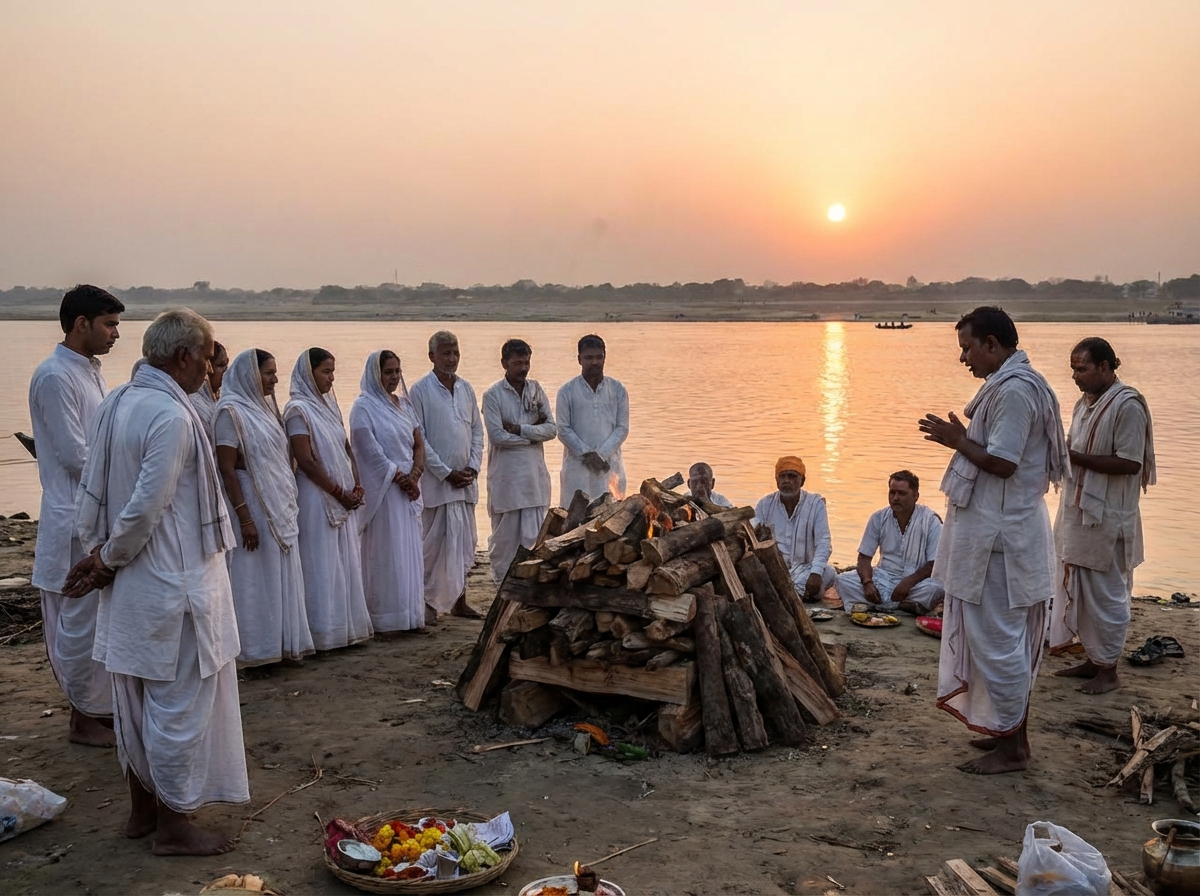
The thirteenth-day funeral rites (Terahvin) — completing the mourning period and helping the departed soul on its onward journey with dignity and the proper Vedic offerings.
Performed by Certified Gurukul Scholars
Antiyeshti, performed as the Terahvin Pind Daan Sanskar, is the Hindu rite held on the thirteenth day after a death. It marks the completion of the mourning period: through Pind Daan, a Shuddhi Havan for purification, and the Rasam Pagri (which honours the new head of the family), it offers comfort and support to the departed soul's onward journey and brings the family a measure of closure. We perform these rites with care and respect for the grieving family.
Families perform it to complete the thirteen-day mourning rites correctly and with dignity; honour the deceased and support the soul's onward journey; bring the family closure and a sense of peace.
Antiyeshti is performed on the thirteenth day after the death (with the twelfth-day rites in the two-day program); the timing follows the date of passing rather than a chosen Muhurta. We arrange scholars and Samagri at short notice given the nature of the rite.
Our scholar arrives with all the puja Samagri. You only arrange a few household items and a clean space — nothing to source or worry about.
Samagri may vary slightly with the scale of your Sankalpa and seasonal availability. Anything specific is always confirmed during your free consultation.
Prayers for the departed soul and the purification of the space.
The thirteenth-day rites are performed.
The ceremonial offering of pindas for the departed.
A purification fire for the family and home.
The rite recognising the new head of the family.
Every booking starts with a short conversation — we understand your Sankalpa, recommend the right Muhurta (auspicious timing), and confirm the details. No obligation.
Speak with a Gurukul scholar — no cost, no obligation.